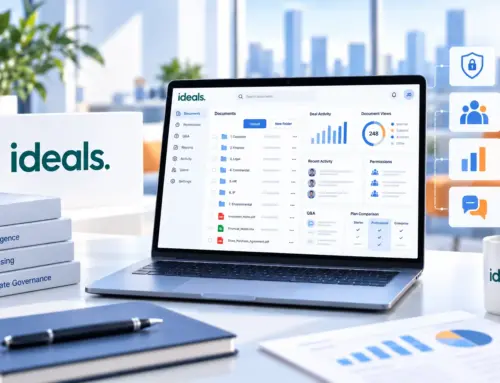

Choosing among the best virtual data room providers in 2026 means comparing transaction workflows, reviewer permissions, security controls, support and total project cost. Ideals is our overall pick for broad transaction workflows, Datasite and Intralinks target large or regulated deals, and DealRoom combines a VDR with M&A project management. Our criteria, evidence limits and relationship with Ideals are disclosed below.
Last updated: October 2026. Review ratings were last checked in October 2026. Prices are public figures from vendor pages and 2026 third-party comparisons; confirm every price with the vendor.
Quick answer: what is the best virtual data room provider in 2026?
For most M&A and due diligence buyers, start by comparing Ideals, Datasite, Intralinks, Firmex and DealRoom against your deal complexity, Q&A needs, reviewer volume and support requirements. Compare the providers in the table below before requesting demonstrations and detailed quotes.
Disclosure: EthosData is part of Ideals. Rankings here are editorial recommendations, not independently certified product scores; our method is explained below.
Virtual data room comparison: providers, pricing and AI support
EthosData is listed because buyers still search for it by name; it is part of Ideals, and its plans follow the Ideals Core, Premier and Enterprise structure.
| Provider | Best for | Public price point | Free trial / demo | AI / MCP | Rating (source) |
|---|---|---|---|---|---|
| Ideals(also written iDeals)Visit website | Global M&A, due diligence, fundraising, legal and enterprise deals | Quote-based (Core, Premier, Enterprise tiers) | Free trial available | MCP connectivity for Claude, ChatGPT and Copilot; built-in redaction | 4.7 (806) · G2 |
| EthosDataGet a quote | M&A, IPOs, fundraising, private equity and legal deals | Quote-based (Ideals Core, Premier, Enterprise structure) | Free trial available | Depends on plan; confirm which AI features each tier includes | 4.4 (18) · Capterra |
| Papermark | Fundraising, M&A and due diligence with a modern, self-serve setup | VDR plans from €99/month | 7-day free trial | MCP server and API for AI agents | 4.5 · G2 |
| Datasite | Large enterprise M&A and investment banking | Quote-based | Free demo available | AI redaction, AI-assisted Q&A drafting, MCP for third-party assistants | 4.4 (397) · G2 |
| Intralinks | Regulated enterprise transactions and large-scale diligence | Quote-based | Demo / quote request | AI redaction | 3.8 (30) · G2 |
| DealRoom | M&A project management with diligence workflows | Flat annual pricing tied to deal volume | Request demo | AI document analysis and summaries | 4.3 (66) · G2 |
| Firmex | Repeat mid-market deals, diligence, compliance and litigation | Subscription or per-project; quote-based | Free trial by request | Redaction; lighter AI toolset than Datasite | 4.8 (351) · Capterra |
| ShareVault | Life sciences, legal and document-heavy diligence | Quote-based | Free trial available | AI redaction and smart search | 4.6 (92) · G2 |
| Ansarada | AI-assisted deal preparation, capital raising and M&A | Quote-based | Free until the deal goes live | AiDA search, AI-Sort, AI-Redact, bidder prediction | 4.5 (235) · G2 |
| Drooms | European real estate, M&A and fundraising | User-based or usage-linked, depending on plan | 30-day free trial | AI-powered VDR | 4.7 (3) · G2 (tiny sample) |
| SecureDocs | Simple VDR projects and quick setup | From $250/month, unlimited users and documents | 14-day free trial | Confirm with vendor | 4.6 (50) · G2 |
| CapLinked | Smaller deal workflows and fundraising | Team plan from about $399/month | Confirm with vendor | Confirm with vendor | — |
| FirmRoom | Lean mid-market deals | Flat storage tiers from about $395/month (2 GB) | Yes | Auto-indexing | 4.6 (22) · G2 |
| Digify | Smaller teams that need protection after download | About $140–190/month (sources differ) | Yes | Confirm with vendor | 4.6 (105) · G2 |
| DocSend | Sales and investor-relations teams adding data rooms | Per-user subscription | Yes | Confirm with vendor | 4.6 (589) · G2 |
| Box, ShareFile, Google Drive, Dropbox | Basic file sharing and content management; not dedicated VDRs | Box about $20–52 per user/month | Box: 14-day trial | Varies by product | — |
Prices are public figures from vendor pages and third-party comparisons published May to October 2026; they change often, and quote-based vendors rarely publish numbers. Ratings were last checked in October 2026 (full list further down). Ratings for Papermark, FirmRoom, Digify and DocSend come from a 2026 third-party roundup. Box figures reflect the wider Box product.
How we evaluated virtual data room providers
We used six buyer-focused criteria: (1) granular permissions and security controls; (2) due diligence workflows such as indexing, Q&A, redaction and audit trails; (3) administration and external reviewer experience; (4) support and implementation; (5) pricing structure and potential extra charges; and (6) documented AI functionality. Recommendations reflect use-case fit and publicly described capabilities, not a laboratory test or an audited ranking, and we do not claim hands-on testing unless stated. Features and prices vary by plan and region, so verify them with each vendor.
Editorial relationship: EthosData is part of Ideals, which is our overall recommendation. Weigh that relationship when reading the rankings. Buyers should confirm EthosData’s current plans, platform and contracting party directly.
Top virtual data room providers in 2026
Each of the ten providers below has a card with pros, cons and the best-fit buyer, followed by three more worth shortlisting. The rest appear in the comparison table above.
 Dedicated VDR provider
1. Ideals (iDeals)
Best for: Global M&A, due diligence, fundraising, legal, corporate development and enterprise transactions.
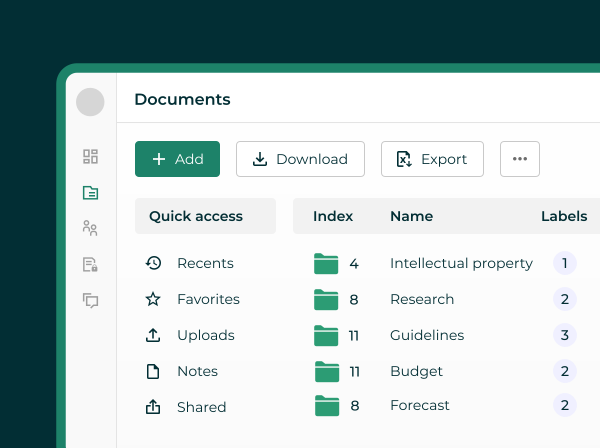
Ideals is a dedicated virtual data room provider built for secure document sharing, due diligence and high-stakes business transactions. Its help center describes encryption, granular permissions, watermarking, IP and domain restrictions, and multi-factor authentication. Read our Ideals VDR review.
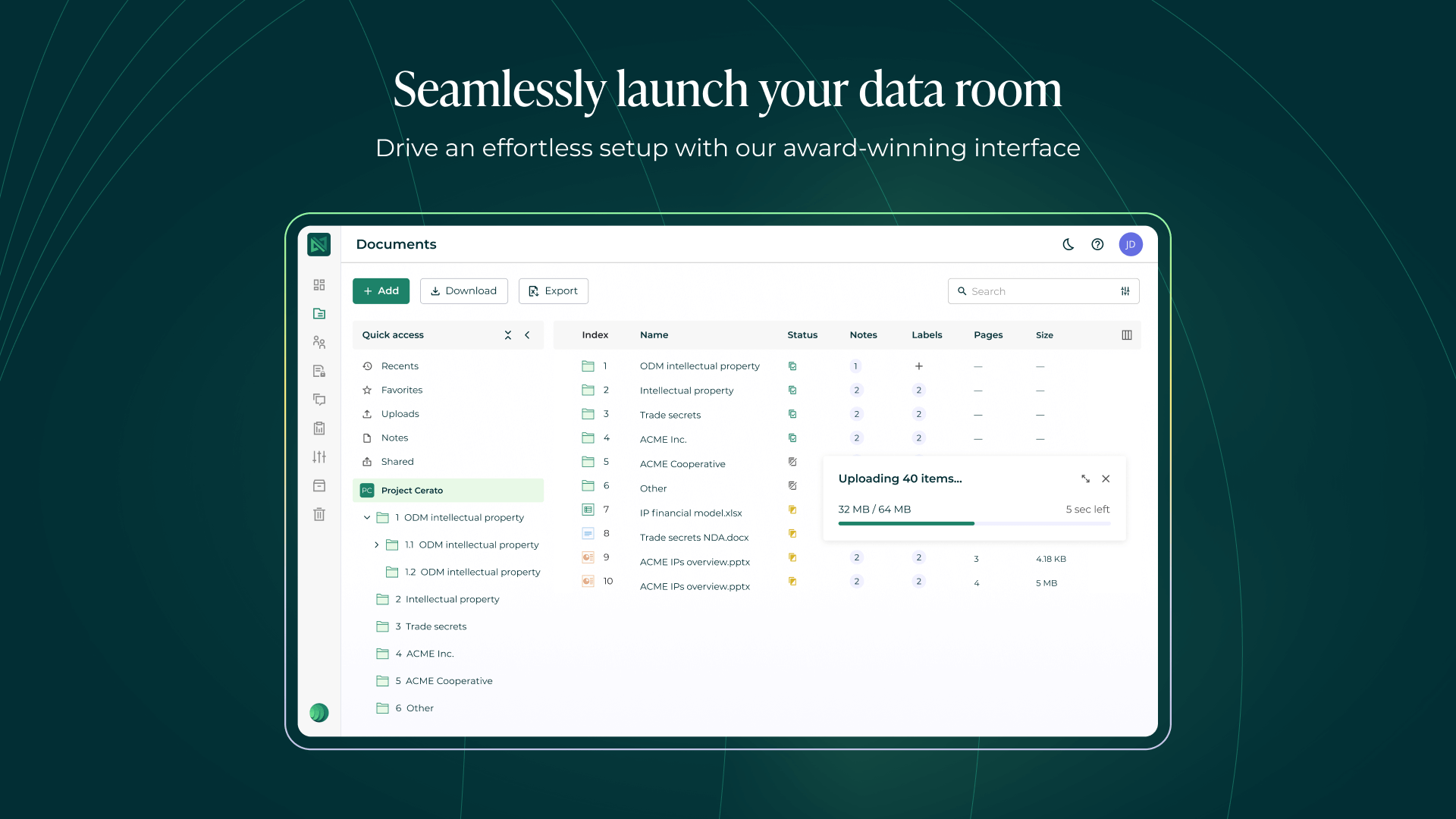
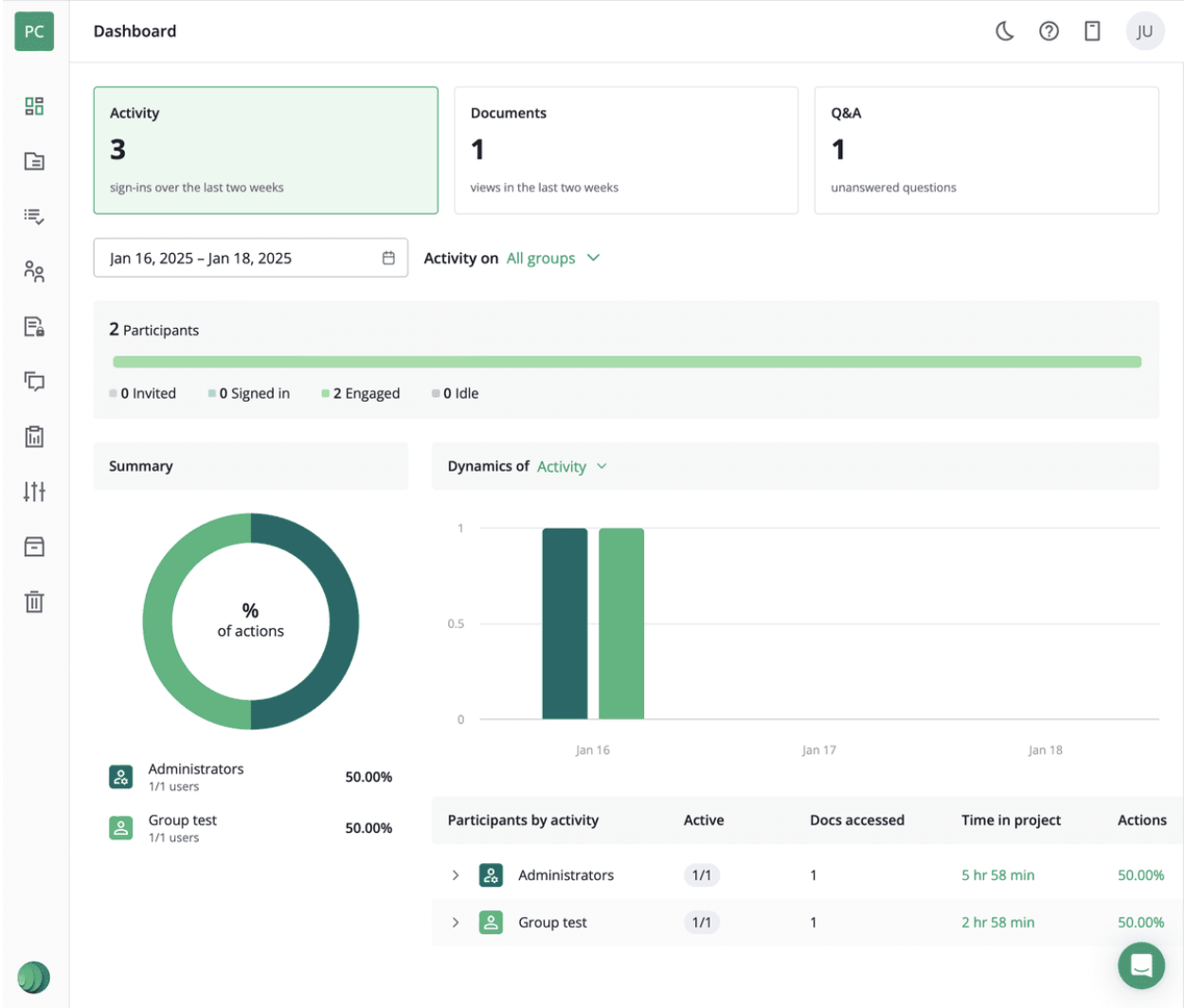
- Highest review volume in this guide (4.7/5 on G2 from about 800 reviews)
- Granular permissions, built-in redaction, OCR search and data centers in nine regions
- MCP connectivity lets teams use Claude, ChatGPT or Copilot inside the room under existing permissions and audit trails
- Pricing usually requires consultation
- Automated indexing can need manual cleanup on complex sets; advanced permissions have a learning curve
M&A, legal, corporate development and private equity teams, investment banks and enterprises that need a mature VDR with strong security and support.
Quote-based / consultation-led
 M&A transaction platform
2. Datasite
Best for: Large enterprise M&A, investment banking and complex due diligence.
Datasite is built for large due diligence processes, investment banking, corporate development and private equity. It highlights AI/ML tools such as automated redaction, with suggested redactions, custom word lists and user review before redactions are applied.
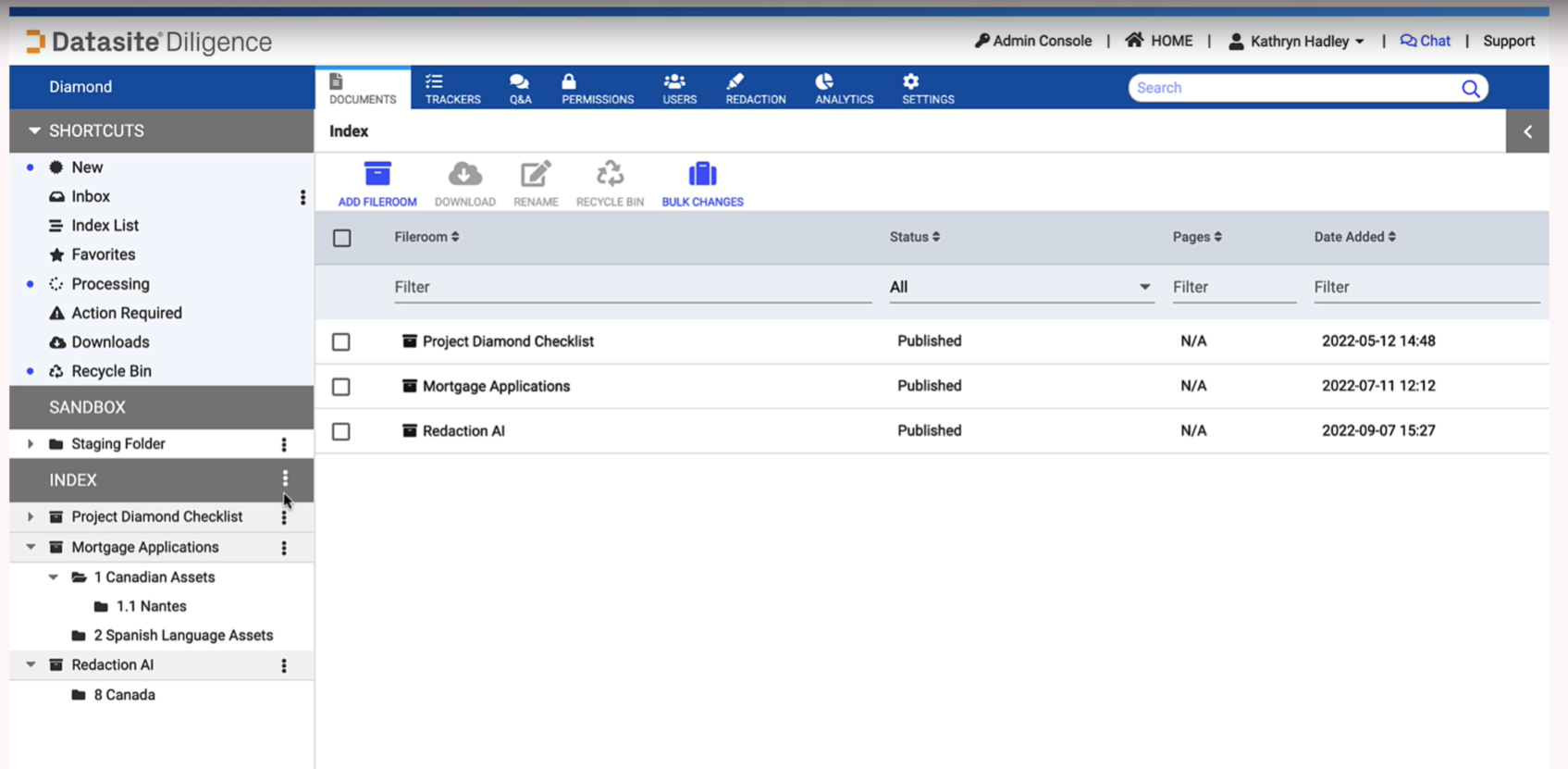
- Deep AI toolset: redaction, Q&A drafting grounded in deal documents, and MCP for third-party assistants
- Analytics and reporting go deeper than most competitors
- Holds up on very large, multi-gigabyte deals
- Quote-based pricing, typically tied to page count
- Interface can feel dated, with a learning curve; may be more than smaller teams need
Investment banks, private equity firms, legal teams and enterprises running large or complex M&A processes.
Enterprise / quote-based
 Modern VDR provider
3. Papermark
Best for: Startup fundraising, M&A due diligence, private equity, investor relations and secure document sharing.
Papermark is a modern virtual data room for dealmakers, founders and finance teams. It combines controlled access with engagement analytics, branded rooms, granular permissions, dynamic watermarking and NDA agreements.
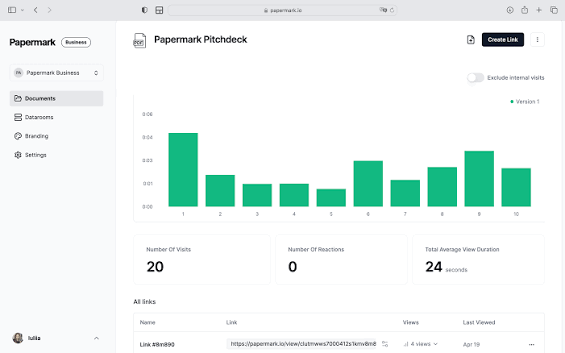
- Transparent pricing from €99/month and an open-source core with an optional self-hosted route
- Page-by-page analytics and a fast, self-serve setup
- MCP server and API for AI agents
- Newer than long-established enterprise VDR brands; support can lag
- Q&A, audit logs, SSO or self-hosting may depend on the plan
Founders, finance teams, advisors and deal professionals who want a modern, branded VDR with clear analytics instead of a heavier legacy platform.
Tiered subscription; VDR plans from €99/month
 Enterprise VDR provider
4. Intralinks
Best for: Regulated enterprise transactions, private equity, fundraising, legal and large-scale due diligence.
Intralinks is one of the longest-standing names in the market, used for regulated transactions, enterprise M&A, private equity, fundraising, legal and compliance workflows where governance and enterprise controls matter.
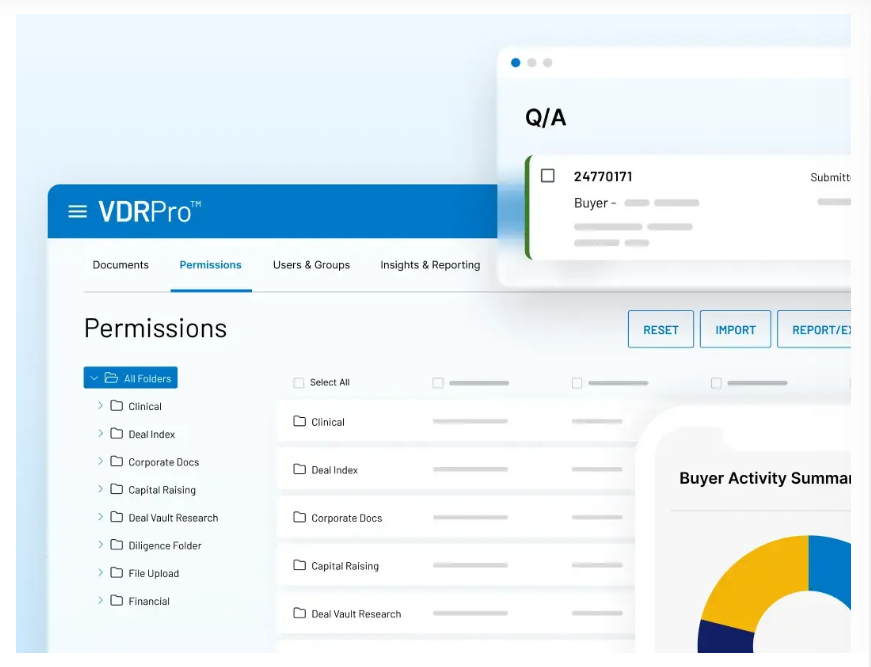
- Information rights management can revoke access to a file after download
- Proven on very large, document-heavy, regulated deals; 24/7 support in 140+ languages
- Interface is less intuitive than newer competitors
- Lowest rating here: 3.8/5 on G2 from about 30 reviews (small sample); quote-only pricing
Large enterprises, regulated industries and organizations with complex security or governance requirements.
Enterprise / quote-based
 M&A workflow platform
5. DealRoom
Best for: M&A project management, due diligence workflows, integration planning and corporate development.
DealRoom is a broader M&A workflow platform with VDR capabilities, built for corporate development, buy-side M&A, diligence and integration. It ties diligence requests to supporting documents.
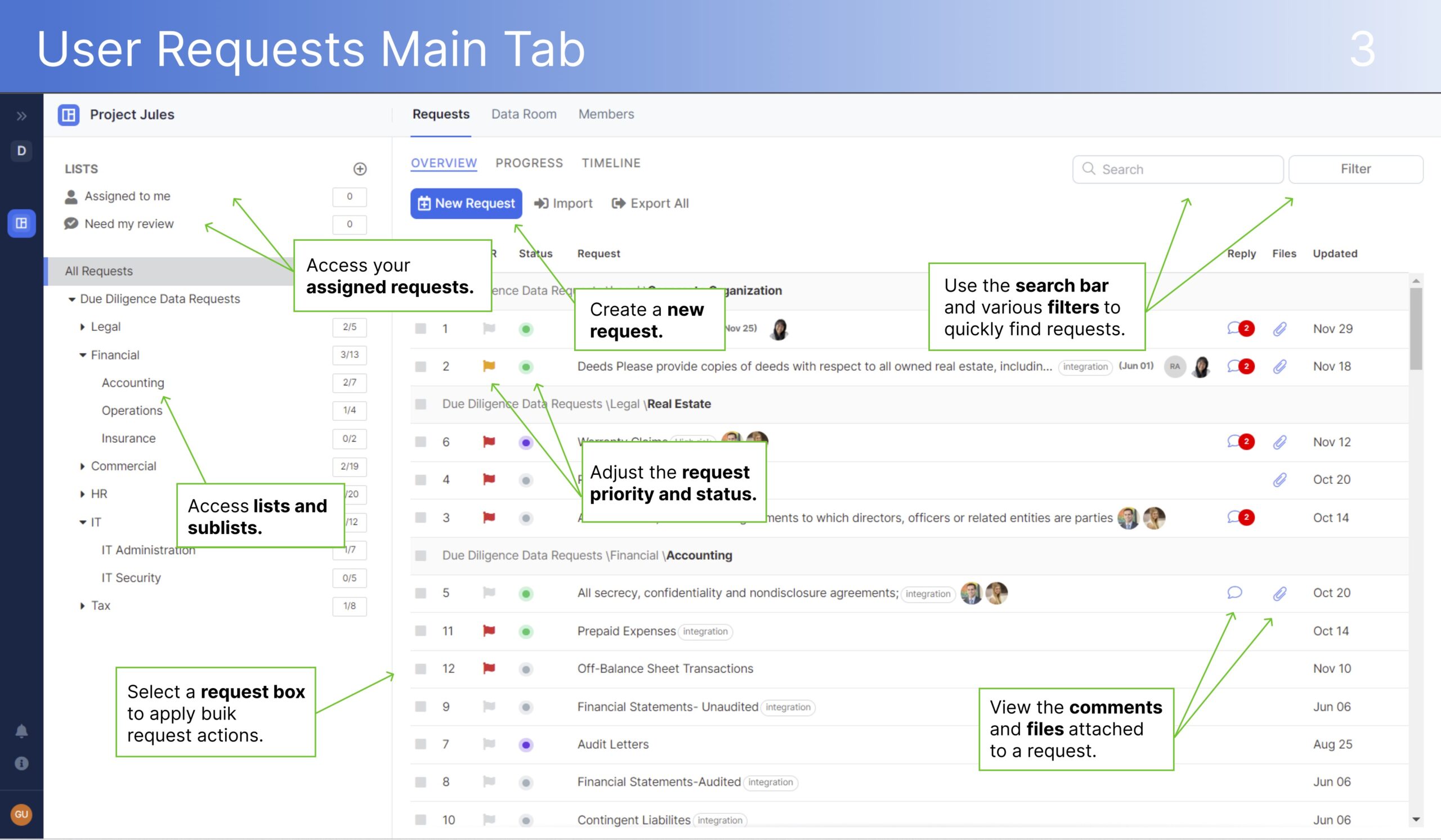
- Diligence and post-merger integration live in one workspace, with uploads tied to open requests
- Predictable flat annual pricing for serial acquirers
- Notification volume can get noisy on document-heavy deals
- A single, one-off deal may not justify the full feature set
Corporate development and buy-side M&A teams that want diligence workflow management alongside secure document sharing.
Flat annual pricing tied to deal volume
 Secure document collaboration
6. ShareVault
Best for: Life sciences, legal, licensing, partnering and document-heavy diligence.
ShareVault is a dedicated VDR for life sciences, legal, licensing, partnering and due diligence, with document control, user activity analytics, AI redaction and structured content organization.
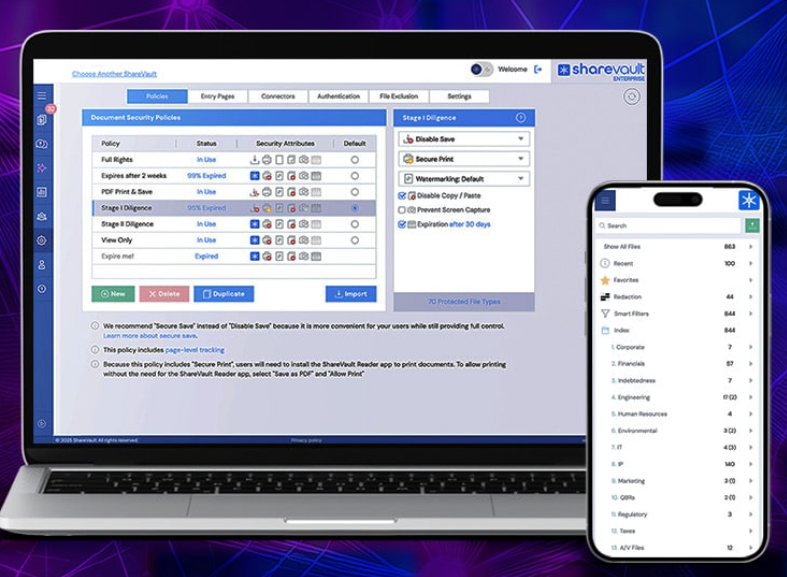
- Strong document control, activity analytics and AI redaction
- 4.6/5 on G2 from about 90 reviews
- Quote-based pricing; fit depends heavily on industry and transaction type
Teams running document-heavy diligence, licensing or partnering, especially in life sciences and legal.
Quote-based
7. Firmex
Best for: Repeat mid-market deals, diligence, compliance, audits and litigation.
Firmex is a purpose-built VDR designed around time-boxed projects: open a room, run diligence, close and archive. Features include automatic indexing with an Email In address, View As and Copy Project.
- Strongest review base here: 4.8/5 on Capterra from 351 reviews
- 24/7/365 support, frequently praised; flexible single-project and subscription pricing
- Quote-based pricing; limited real-time co-editing; mobile less polished than desktop
- Lighter AI toolset than Datasite, per Firmex's own comparison
Mid-market M&A boutiques, law firms and corporate teams running frequent, clearly time-boxed deals.
Subscription or per-project; quote-based
8. Ansarada
Best for: AI-assisted deal preparation, capital raising, governance and multi-bidder M&A.
Ansarada leans on AI for preparation, redaction and bidder insight, including the AiDA assistant for sourced answers, AI-Sort, AI-Redact and bidder-engagement prediction.
- Broad AI toolset and structured Q&A that keeps buyer questions on record
- Free until the deal goes live; 4.5/5 on G2 from about 235 reviews
- Quote-based pricing (some older comparisons list storage tiers, so confirm current terms)
- Learning curve; entry storage tiers can fill up fast
Sell-side teams, bankers and executives who want guided preparation and AI-driven bidder insight.
Quote-based; free until go-live
9. SecureDocs
Best for: Simple VDR projects, quick setup and predictable cost.
SecureDocs states that its deal room starts at $250 per month for unlimited users and unlimited documents, with an about 10-minute setup, which makes it easy to budget for.
- Predictable flat fee with unlimited users and documents; fast setup
- 4.6/5 on G2 from about 50 reviews
- Lighter fit for complex enterprise transactions; confirm AI features and support level
Small and mid-size teams, serial acquirers and fundraisers who want a simple, predictable-cost room.
Flat-fee subscription from $250/month
10. EthosData
Best for: Buyers who already know the EthosData brand and want its listed plans for M&A, IPOs, fundraising, private equity and legal transactions.
EthosData is part of Ideals. Its pricing page lists Core, Premier and Enterprise plans, says final pricing depends on the project, and says listed plans include unlimited users. Documented controls include AES-256 encryption at rest, SSL/TLS in transit, two-step verification, dynamic watermarks, fence view, granular permissions, IP restrictions and audit logs.
- Unlimited users in listed plans; security controls documented on its pricing page
- Deal-specialist support included with plans, per its Capterra listing
- Quote-only pricing and a small review base (4.4/5 from 18 reviews on Capterra)
- Confirm the current platform, plan details and contracting party
Buyers who want to evaluate through the EthosData team and the Ideals plan structure.
Quote-based; plans by project, administrators, storage and service level
More providers worth shortlisting
FirmRoom is a lean, self-service VDR with flat storage-tier pricing from about $395 per month for 2 GB. A 2026 third-party roundup notes that Fence View and IP restrictions are not included.
DocSend (Dropbox) adds Advanced Data Rooms to its link-tracking tools on higher plans, with per-user pricing. The same roundup notes that deeper redaction and Bates numbering are not part of it.
Digify focuses on protection that follows the file after download, including revoking access and blocking printing or forwarding. Pricing starts around $140 per month billed annually; other comparisons list $190.
Best virtual data room providers by use case
Best virtual data room provider for M&A
Short answer: Ideals, Datasite, Intralinks, DealRoom, Firmex and EthosData are strong options for M&A workflows. Ideals is ranked best overall in this guide because of its broad VDR fit. Datasite and Intralinks are strong for large enterprise transactions. DealRoom is useful when teams need workflow management as well as document sharing. Firmex and EthosData are relevant for teams that want practical transaction support and controlled document access. Ideals’ MCP capability is especially relevant for M&A teams that want to use AI assistants inside the VDR for sell-side and buy-side workflows, such as setting up room structures, checking missing documents, managing bidder access, monitoring engagement, drafting Q&A questions and compiling diligence findings. Datasite offers comparable MCP connectivity for large deals. Read more: Virtual Data Room For M&A: Checklist, Structure, Costs.
Best virtual data room provider for due diligence
Short answer: Ideals, Datasite, Intralinks, Firmex, ShareVault and EthosData are commonly evaluated for due diligence workflows. Compare Q&A workflows, audit logs, indexing, permissions, redaction and reviewer experience, and check whether AI can work directly inside the VDR, as Ideals MCP is designed to do while respecting user access rights. See our guide to the best data rooms for due diligence.
Best virtual data room provider for fundraising
Short answer: Ideals, EthosData, Ansarada, SecureDocs, Papermark and CapLinked are strong options for fundraising workflows. Prioritize investor access, activity tracking, permission control and pricing predictability; Papermark and SecureDocs publish pricing up front. Read also: Virtual data room for startups: investor-ready setup, checklist, and best practices.
Other use cases at a glance
| Use case | Strong options | What to prioritize | Read more |
|---|---|---|---|
| IPO preparation | Ideals, EthosData, Datasite, Intralinks | Controlled disclosure, legal review and auditability across bankers, lawyers and auditors. | IPO data room |
| Private equity | Ideals, EthosData, Datasite, Firmex, DealRoom, Intralinks | Repeat-project workflows, investor reporting, Q&A, permissions and auditability. | Private equity data room |
| Legal teams | Ideals, EthosData, Intralinks, ShareVault, Firmex | Confidentiality, access logs, watermarking and role-based access. | Legal data room |
| Real estate | Drooms, Ideals, EthosData, Firmex | Organized asset documentation and controlled bidder access; Drooms is strong in European real estate. | Real estate data room |
| Simple secure sharing | SecureDocs, CapLinked, FirmRoom, ShareFile, Box | Quick setup and clear entry pricing. ShareFile and Box are not dedicated VDRs. | — |
Virtual data room pricing comparison
Pricing varies by provider, project size, users, storage, support, security, AI functionality and contract length, so compare the pricing model, not just the headline price. Public price points per provider are in the comparison table above.
| Pricing model | How it works | Pros | Risks |
|---|---|---|---|
| Per-page pricing | Charged by uploaded pages | Predictable for very small document sets | Expensive as document volumes grow |
| Per-user pricing | Charged by internal or external users | Simple for small teams and limited reviewer groups | Costs rise as buyers, advisors and investors are added |
| Storage-based pricing | Charged by amount of data stored | Useful when user access is broad or unlimited | Needs realistic storage estimates up front |
| Project-based pricing | Charged per deal or project workspace | Suits M&A, fundraising and defined projects | Scope, duration and included features must be clear |
| Flat monthly subscription | Fixed monthly fee for ongoing access | Predictable budgeting | May not suit short or one-off transactions |
| Enterprise quote-based | Custom package by users, storage, features and support | Flexible for complex requirements | Hard to compare without a sales consultation |
Hidden VDR costs to check before you sign
SRS Acquiom’s analysis of more than 3,800 M&A deals, as cited in a 2026 third-party guide, found that actual VDR costs often exceed initial quotes by two to ten times, driven by setup fees and storage overages. Ask every vendor to quote the total, not the headline rate:
- Setup and onboarding: is room setup included, and is live training limited or unlimited?
- Storage and overages: what is the cap, and what does each extra gigabyte or page cost?
- Duration and extensions: what happens if the deal runs past the quoted term?
- Users and projects: are external users, administrators and additional projects included?
- Add-ons: are AI features, advanced security, Q&A, 24/7 support and archive exports plan-dependent?
Pricing takeaway: a lower headline price does not always mean a lower total cost. Read the full VDR pricing comparison
Are there virtual data rooms with free trials?
Yes. Many providers offer a free trial, free demo, trial by request or a free setup period; the comparison table above shows each one. Terms vary: Ansarada is free until the deal goes live, and Ideals says a trial room can be used for live transactions and converted to a subscription. Before starting, confirm what the trial includes (full functionality, external users, Q&A, audit logs, storage and user limits, support, exports) and verify terms with the provider.
Virtual data room provider reviews: what buyers should look for
Focus on recurring themes in reviews instead of star ratings alone, and read them together with product documentation and pricing pages, because reviews can reflect older versions or plan names.
| What to check | Positive signal | Warning sign |
|---|---|---|
| Setup speed | Room launches quickly with clear onboarding. | Setup requires heavy manual work. |
| Support | 24/7 support and live transaction help. | Slow support during active deals. |
| External user experience | Buyers, investors and advisors access files easily. | Reviewers struggle with login or navigation. |
| Permissions | Admins easily control view, download and print rights. | Permissions are confusing or error-prone. |
| Pricing | User, storage, project and support costs are clear. | Extra fees are discovered late. |
| Q&A and search | Questions are assigned, tracked and exported; documents are easy to find. | Q&A is manual or search performs poorly on large sets. |
| Audit logs and archive | Activity and completed rooms can be exported. | Reporting is limited or export and archive fees are unclear. |
| AI tools | AI reduces manual review, redaction or search work. | AI features are unclear, limited or sold separately. |
Virtual data room provider ratings and review counts
We recorded each provider’s visible rating, review count and source from public review platforms. A 4.7 rating from hundreds of reviews is not directly comparable to a similar rating from only a few, so use ratings as one signal among several.
| Provider | Review source | Rating | Review count | Confidence |
|---|---|---|---|---|
| Ideals Virtual Data Room | G2 reviews | 4.7 / 5 | 806 reviews | High |
| Datasite Diligence | G2 reviews | 4.4 / 5 | 397 reviews | High |
| Ansarada | G2 reviews | 4.5 / 5 | 235 reviews | High |
| ShareVault | G2 reviews | 4.6 / 5 | 92 reviews | Medium |
| DealRoom | G2 reviews | 4.3 / 5 | 66 reviews | Medium |
| SecureDocs Virtual Data Room | G2 reviews | 4.6 / 5 | 50 reviews | Medium |
| Intralinks VDRPro | G2 reviews | 3.8 / 5 | 30 reviews | Low |
| Firmex Virtual Data Room | Capterra reviews | 4.8 / 5 | 351 reviews | High |
| EthosData | Capterra reviews | 4.4 / 5 | 18 reviews | Low |
| Drooms | G2 seller profile | 4.7 / 5 | 3 reviews | Low |
Ratings last checked in October 2026 on public G2 and Capterra pages. Platforms update continuously, so confirm current ratings and recent feedback before deciding.
Security features to compare in virtual data room providers
Security is one of the main reasons companies choose a virtual data room over generic file sharing. Compare encryption at rest and in transit, multi-factor or two-step verification, granular permissions, dynamic watermarks, fence view, IP restrictions, audit logs, SSO, compliance certifications and archive exports. Ideals highlights encryption, multi-factor authentication, watermarking, IP and domain restrictions and granular permissions in its help center, and EthosData’s pricing page lists AES-256, SSL/TLS, two-step verification, fence view and compliance standards including SOC, ISO 27001, GDPR, HIPAA and PCI DSS. For AI-enabled workflows, also check whether AI activity follows the same permissions and audit trail as human users. Read more about virtual data room security.
Where your data lives: hosting regions and data residency
Hosting determines which data-protection rules apply, so ask early. Ideals says it runs data centers in nine regions, Drooms positions European hosting, and Papermark offers an optional self-hosted route. Some vendors also publish single-tenant or bring-your-own-storage deployments; DocullyVDR Private is one example. Ask which region stores your live room, backups, logs and support data, and whether you can choose it at setup.
AI capabilities in virtual data room providers
Useful AI features include document search, chat with documents, redaction, translation, auto-indexing, Q&A drafting and document classification. MCP (Model Context Protocol) connects an approved AI assistant to the VDR so it can search, analyze and take permitted actions while the room’s permissions and audit trail stay in force. It is not unique to one vendor:
| Provider | AI and MCP capabilities (per vendor materials and 2026 third-party reviews) |
|---|---|
| Ideals | MCP connectivity so teams can work with Claude, ChatGPT or Copilot inside the room, under existing permissions and audit trails |
| Datasite | MCP support for Claude, ChatGPT and Copilot, AI redaction and Q&A drafting grounded in deal documents |
| Papermark | MCP server and API that let agents create rooms, upload documents and pull analytics, while respecting permissions |
| Ansarada | AiDA search assistant, AI-Sort, AI-Redact and bidder-engagement prediction |
| Intralinks | AI redaction and AI-supported deal tools |
| ShareVault | AI redaction and smart search |
If your organization restricts AI: some buyers, especially in regulated sectors, prohibit AI processing of deal documents, and at least one vendor, DocullyVDR, publishes a no-AI pledge. Ask whether AI can be disabled, whether any AI service processes your content, and whether documents are used for model training. Related reading: AI in M&A: The 5-Layer Value Stack That Will Define Dealmaking in 2026–2030.
Are Box, Google Drive and Dropbox virtual data room providers?
No. Google Drive and Dropbox are cloud storage and file-sharing platforms, and Box is a content management platform. They work for basic sharing, but usually lack deal-specific Q&A, granular disclosure workflows and transaction support. A middle path exists: some products add data-room controls on top of Google Drive, Dropbox or Microsoft 365, which can suit teams that want files to stay in tools they already use. Check which audit trail, permissions and support you actually get, and prefer a dedicated VDR for M&A, IPO preparation, fundraising, legal review or regulated diligence.
| Requirement | Dedicated VDR | Cloud storage |
|---|---|---|
| M&A due diligence | Yes | Limited |
| Granular external permissions | Strong | Varies |
| Q&A workflow | Usually included | Usually not included |
| Audit trail | Detailed | Limited or configuration-dependent |
| Watermarks and fence view | Common | Limited or unavailable |
| Buyer activity analytics | Common | Limited |
| Suitable for IPO or regulated diligence | Yes, depending on provider | Usually not ideal |
Virtual data room provider checklist
Run through this list before any provider goes live on a transaction, and test the reviewer experience yourself.
Virtual data room glossary
FAQ
What are virtual data room providers?
Who are the top virtual data room providers in 2026?
What is the best virtual data room provider overall?
Is EthosData part of Ideals?
Which virtual data room provider is best for M&A?
Which virtual data room provider is best for fundraising?
How much do virtual data room providers cost?
What AI features do virtual data room providers offer, and what is MCP?
Is Google Drive, Dropbox or Box a virtual data room provider?
Which is better: Ideals, Datasite or Intralinks?
Conclusion: choosing the right virtual data room provider
The best virtual data room provider depends on the transaction, team, security requirements, support expectations and pricing model. Ideals is a strong overall choice for global VDR workflows; Datasite and Intralinks suit large enterprise and regulated deals; DealRoom suits teams that need M&A workflow management; Firmex suits repeat mid-market deals; ShareVault suits document-heavy diligence; Ansarada suits AI-assisted deal preparation; Papermark and SecureDocs suit teams that want transparent, predictable pricing; and Drooms is strong for European real estate. EthosData is relevant for buyers who want its listed plans, which follow the Ideals structure.
For serious M&A, IPO preparation, fundraising, legal review or regulated due diligence, choose a dedicated provider with strong security, granular permissions, audit trails, Q&A, reliable support and a pricing model that fits the project.
Last reviewed: October 2026
Pricing accuracy note: Public pricing and packaging can change. Confirm users, storage, administrators, AI features, support level, archive exports and contract terms directly with each provider before purchase.